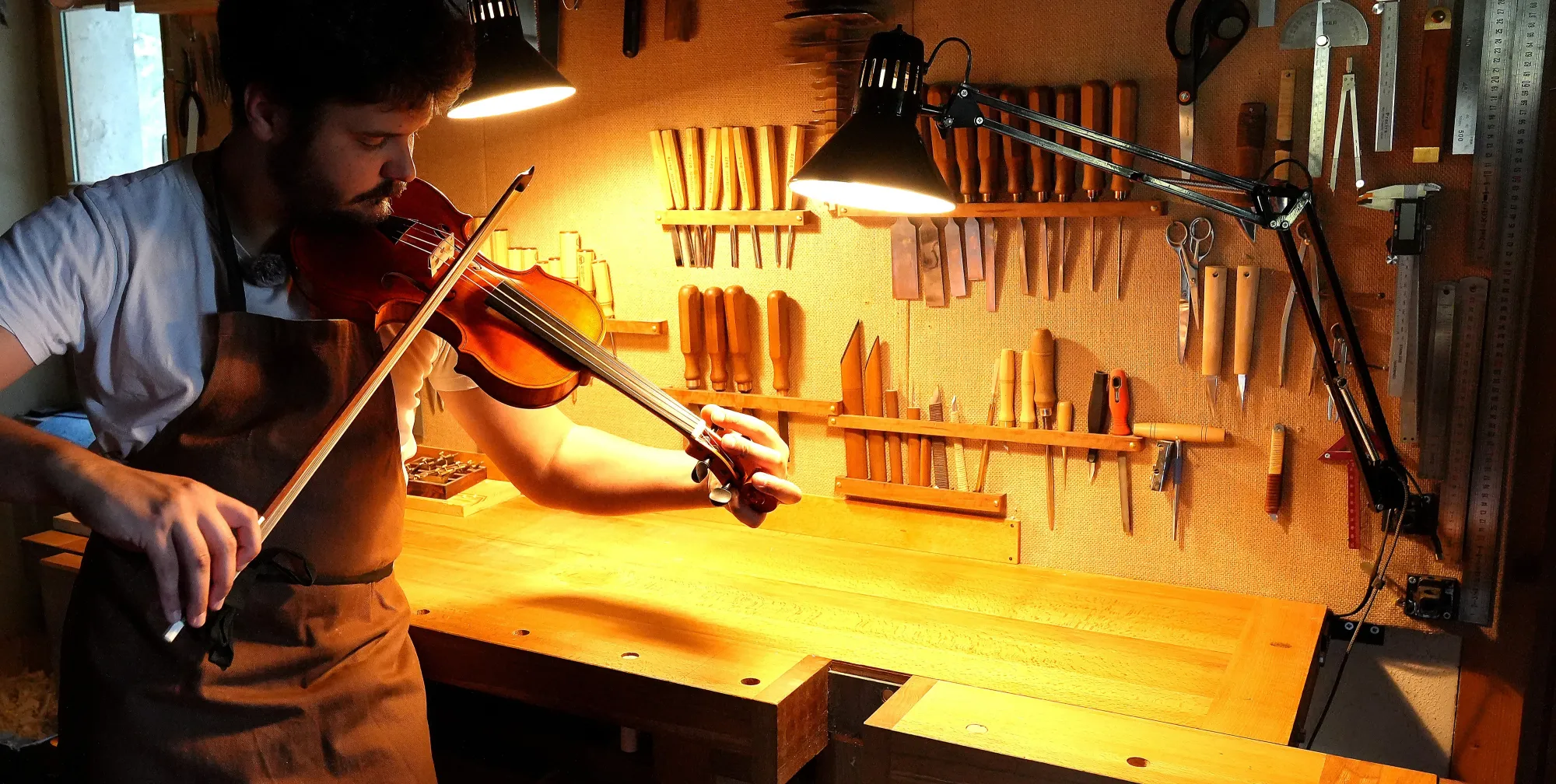
Les Rousses, Jura, France: violin, viola, cello, viola da gamba, lute
I build instruments entirely by hand, with sound as the guiding thread
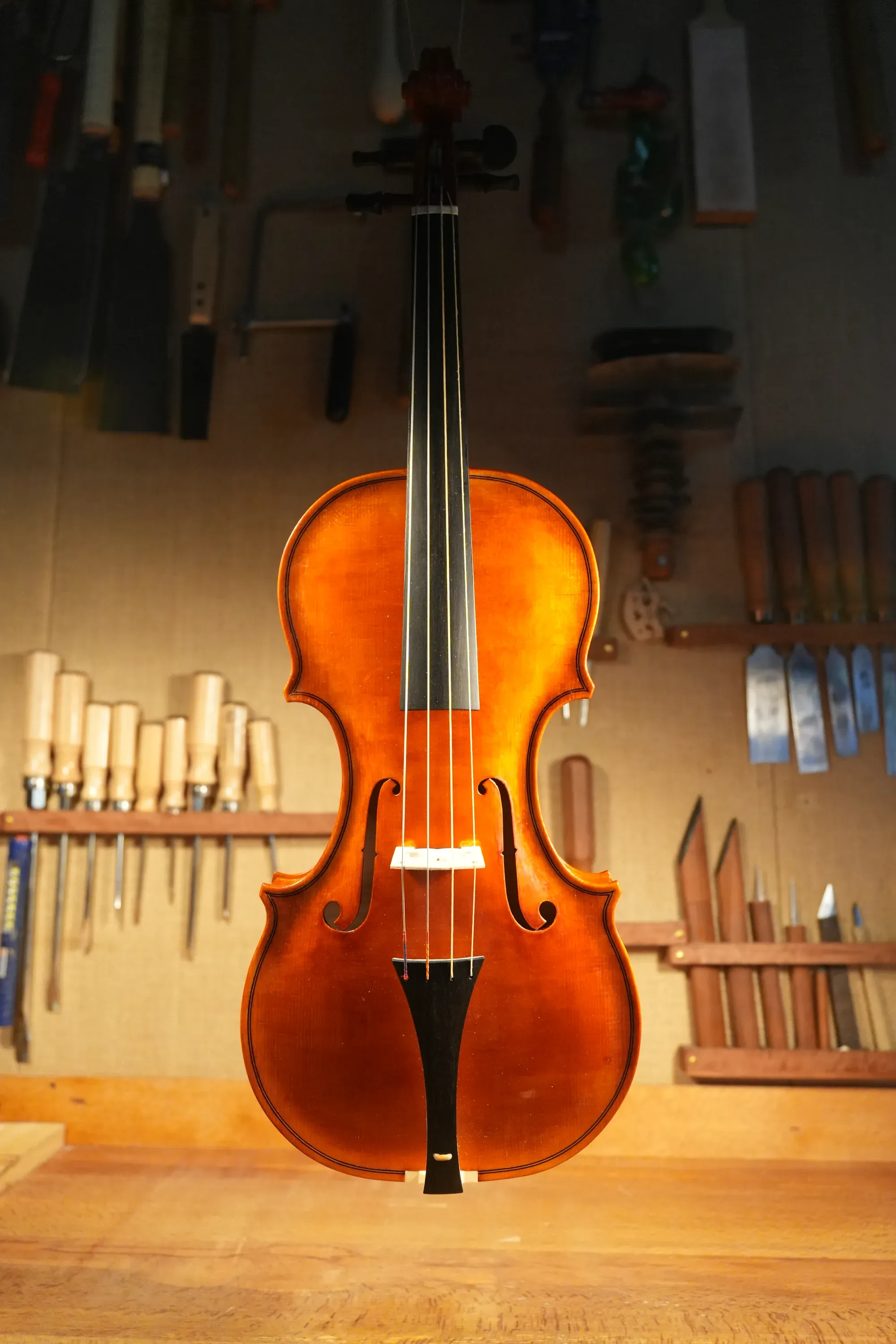
Each one begins with historical research, and with a very old question: how an instrument comes to sound. What moves me most are historical instruments, the ones now called baroque, somewhat wrongly. On them I look for a singing tone. Everything points that way, down to the bridges, which I cut after models taken from old instruments and from period paintings.
The aim is to recover, as faithfully as possible, the way these instruments were built several centuries ago.
Nicolas Wicky, instrument maker
What the work rests on
A craft, a lineage, a raw material.
- Historical making
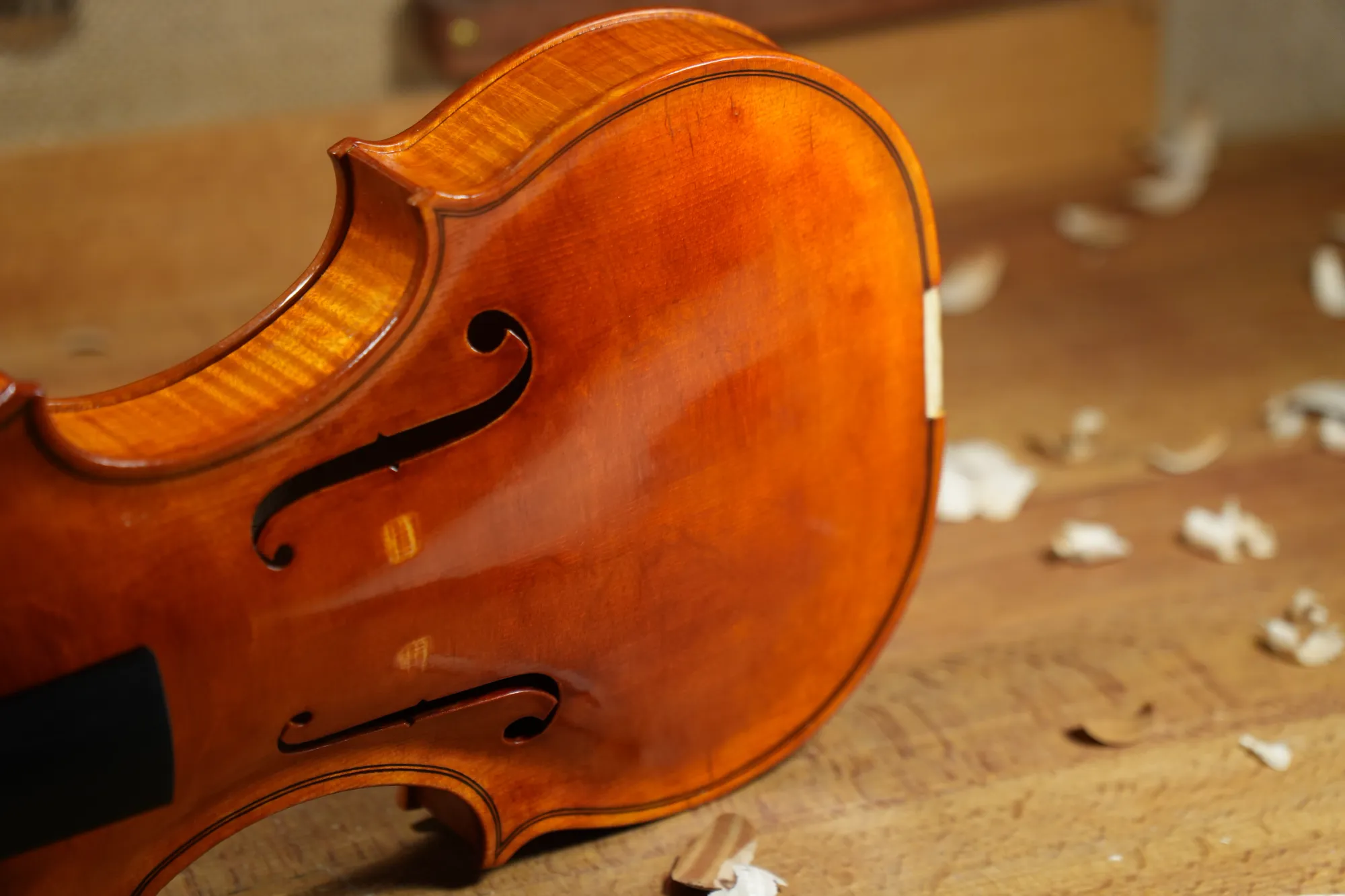
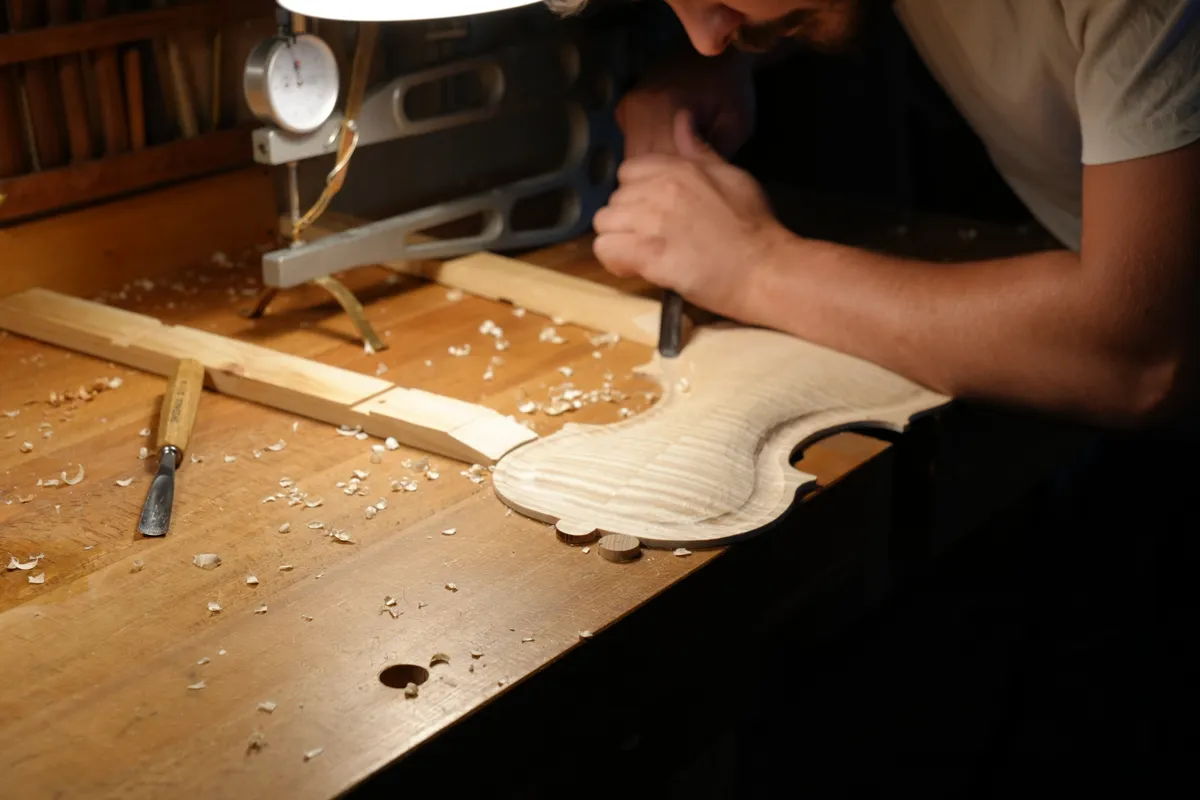
- The gestures, proportions and materials of another age are recovered as faithfully as possible: the art of the line, traditional tools, gut strings.
- Master to apprentice
- I trained at a distance with the Swedish maker Peter Westerlund, then at the bench of Luc Breton, in Switzerland. He is the one who taught me most of what I know.
- The wood
- I cut my own tonewood in the forests near the workshop, the Risoux above all, with the support of the Office national des forêts.
A closer look
Instrument making
The craft, the approach, and the instruments that leave the workshop. Violin, viola, cello, viola da gamba, lute, built one at a time.
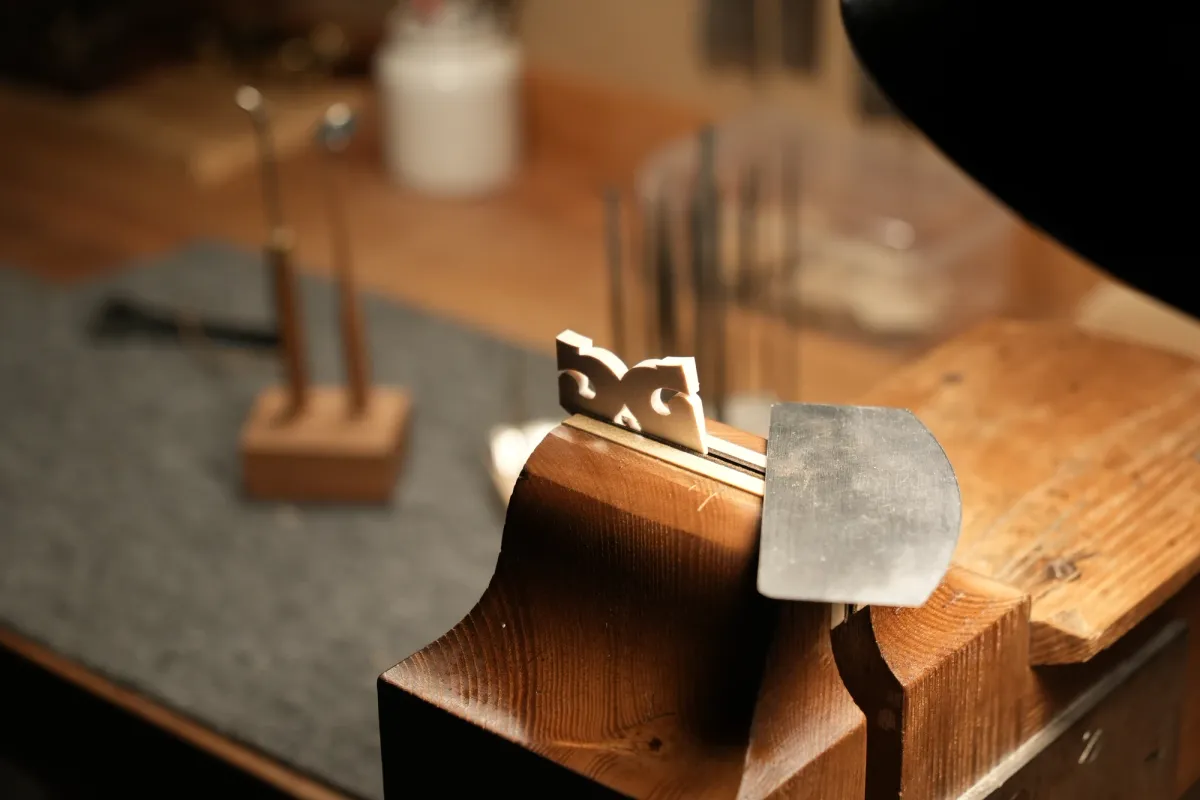
Our instruments
Bridges, tailpieces, pegs: every part is cut here with hand tools, and made for one instrument and no other.
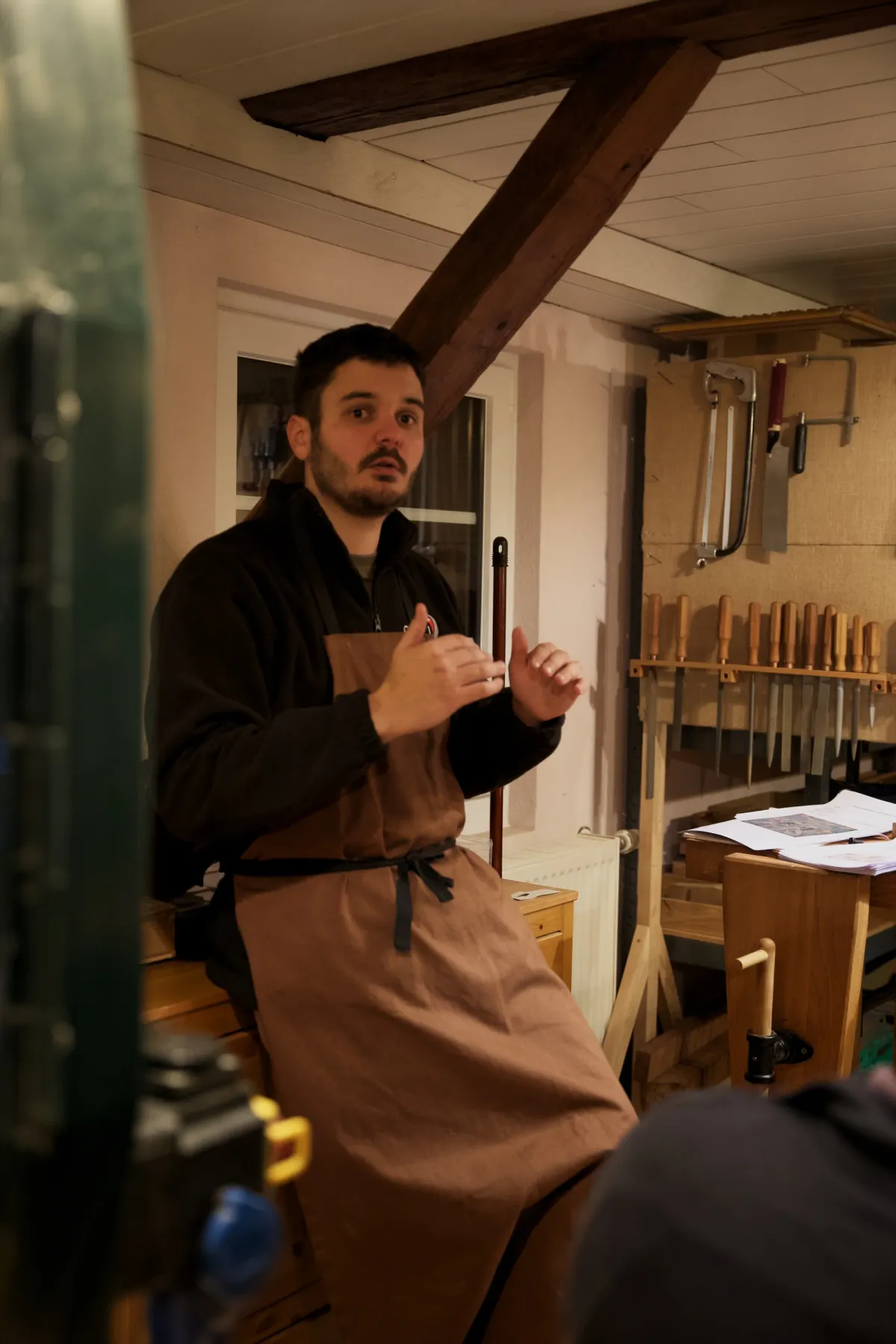
School
An apprentices' workshop beside the makers' own, in Les Rousses. Learning happens at the bench, by doing, as trades were once learned.
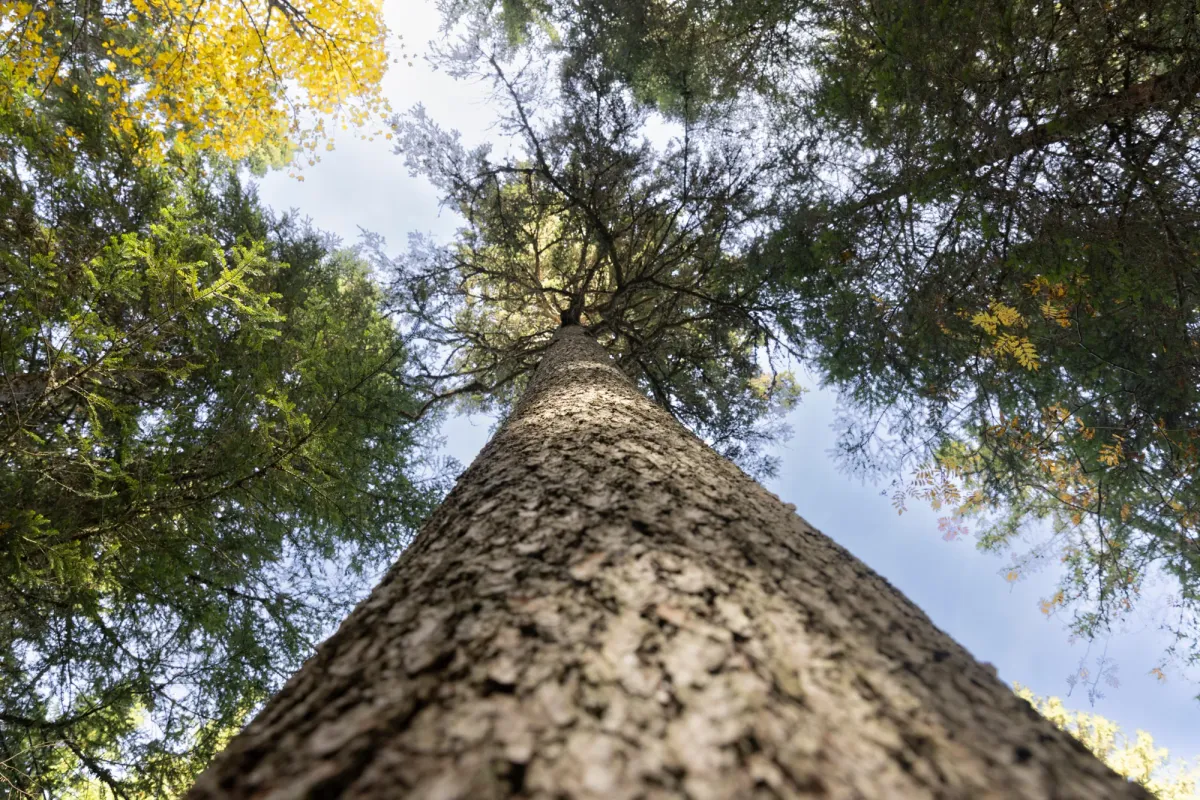
Risoux tonewood
Sound is at stake from the choice of the log, long before the first cut of the gouge. Where the wood comes from, and how I choose it.
Write to the workshop
I answer every message personally, within a few days
Enquiries from abroad, Switzerland, Russia and elsewhere, welcome.